MANAV   KALAMKARI
>
Subtle rotating Kalamkari pattern

About Us

Preserving the soul of ancient Kalamkari with bold innovation and passion since 2009.

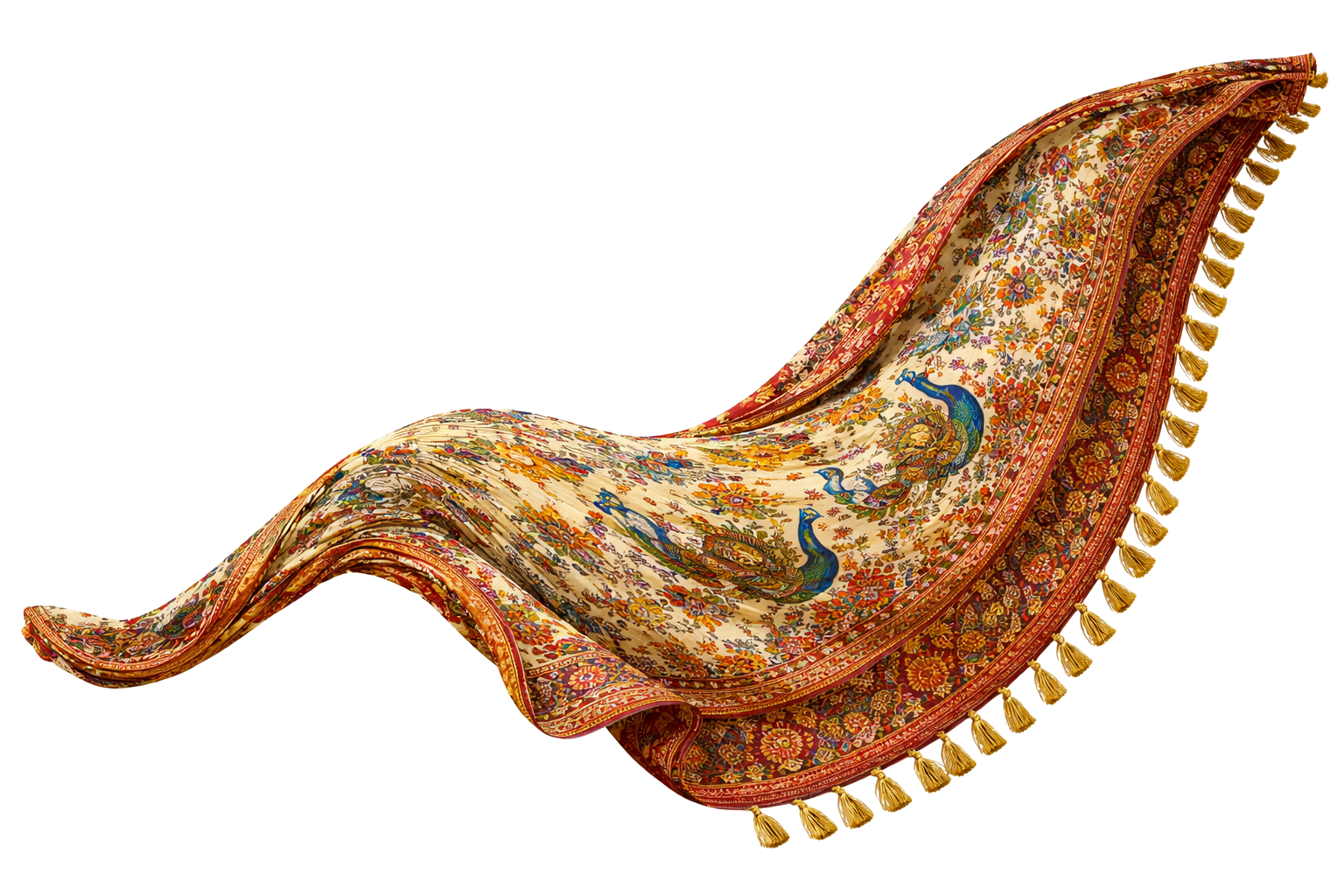
Manav Kalamkari Saree

Our Story

Passionate about preserving and innovating the ancient art of Kalamkari, they introduced the revolutionary Kalamkari Patchwork Sets. These include a 10-meter border, 6 pallu patches, 20 all-over patches, and a matching blouse, making Kalamkari more versatile and accessible to everyone.

Meet the Founders

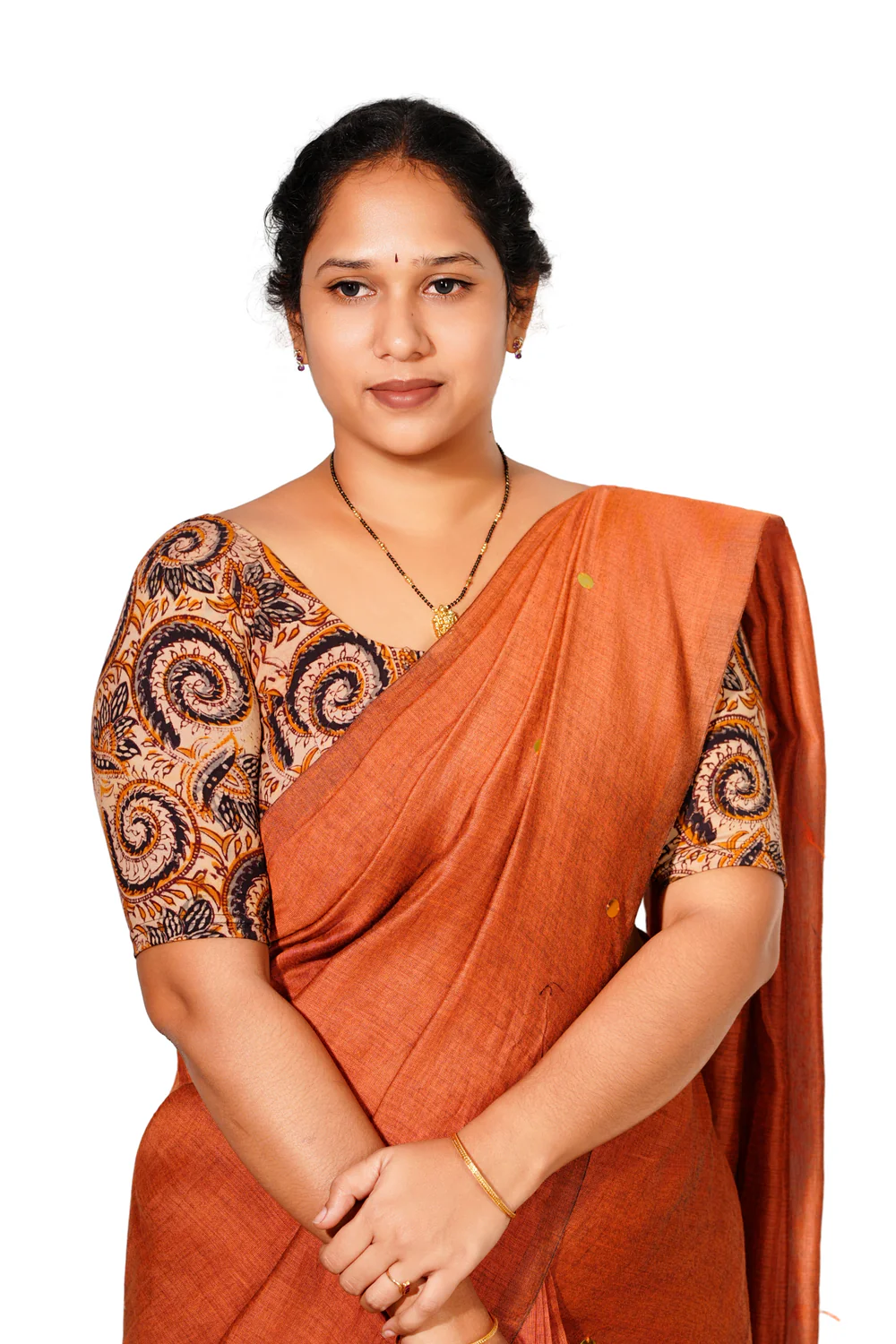
Mr. Naveen Kumar Sabbisetty

Mr. Naveen Kumar Sabbisetty

Visionary leader driving innovation in traditional Kalamkari craftsmanship with modern accessibility.

Mrs. T N V Lakshmi (Manogjna)

Mrs. T N V Lakshmi (Manogjna)

Creative force behind the preservation of authentic hand-block printing techniques and organic colors.

The Art of Kalamkari

A timeless craft involving 23 intricate steps, using only natural dyes and hand-block printing techniques passed down through generations.

River wash of saree

Cotton Preparation

The cotton cloth is thoroughly washed in flowing water to remove starch, oil, and impurities. This cleansing allows natural dyes to bond effectively. The fabric is then sun-dried, ensuring a clean, absorbent base.

Step 1 · Purifying Wash
Natural dye preparation

Myrobalan Treatment (Mordanting)

The fabric is soaked in myrobalan solution, which acts as a natural mordant. It prepares the cloth to accept dyes and enhances color depth. This step ensures long-lasting vibrancy and durability in designs.

Step 2 · Tanning Treatment
Artisans painting with kalam

Sketching With Kalam (Pen)

Artisans draw intricate outlines using a kalam, a bamboo or date-palm pen. The designs often depict mythological stories, flora, and fauna. The hand-drawn lines form the foundation of the entire artwork’s composition.

Step 3 · Pattern Drafting
Sarees drying under sun

Applying Natural Dyes

Natural dyes made from plants, roots, and minerals are carefully applied. Each color requires specific preparation and temperature control. Layering these dyes creates rich patterns while preserving the traditional eco-friendly essence of Kalamkari art.

Step 4 · Eco-Friendly Coloring
Artisans painting with kalam

Wax or Resist Application

A resist—traditionally wax or sometimes mud—is applied to protect certain areas from absorbing color. This helps maintain clarity in detailed sections and allows controlled color placement, creating contrast and sharp definition in the artwork.

Step 5 · Protective Resist
Sarees drying under sun

Washing, Boiling & Finishing

The dyed cloth is repeatedly washed and boiled to fix colors permanently. Final sun-drying enhances the fabric’s natural sheen. This conclusion reveals the complete, vibrant Kalamkari design, ready for use or further embellishment.

Step 6 · Final Finishing